


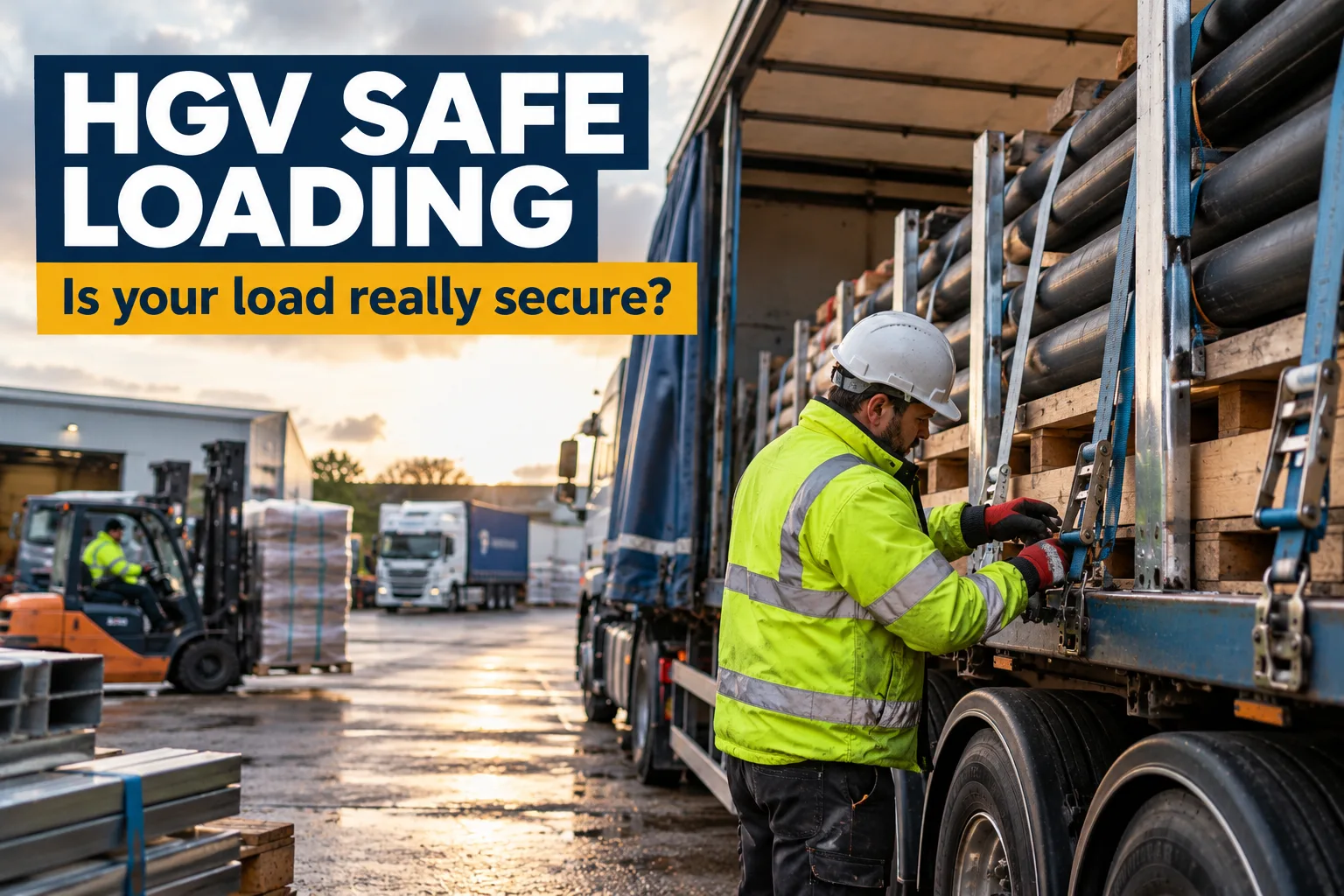
What Is HGV Safe Loading? A Guide for Operators, Drivers and Loaders
Safe loading means making sure that goods and other items carried in or on a vehicle are loaded, secured, transported and unloaded safely.
Whether you’re an HGV operator, Transport Manager, professional driver, warehouse operative or yard person, load safety is everybody’s business. Pasted text
It doesn’t matter whether the journey is five miles or 500 miles. If a load isn’t properly positioned and secured, it can move during braking, cornering or acceleration. That can affect the vehicle’s stability and handling – or, in the worst cases, result in part of the load falling from the vehicle.
Current DVSA guidance is clear: all loads carried on vehicles must be secure, regardless of the vehicle, the size or type of load or the length of the journey. An unsecured load can affect vehicle handling, increase braking distances and increase the risk of a rollover. GOV.UK
So, let’s have a proper look at what safe loading means, who is responsible and what HGV operators should be doing to manage the risks.
What Is Safe Loading?
Put simply, safe loading is the process of loading and securing goods so that they remain safe and stable throughout the journey and can be unloaded safely at their destination.
It’s not simply about throwing a couple of straps over a load and thinking, “That’ll do.”
You need to consider the:
- vehicle
- load
- securing equipment
- weight and weight distribution
- loading and unloading process
- journey being undertaken.
According to current DVSA guidance, a load-securing system can include the structure of the vehicle, physical barriers such as bulkheads, stanchions, pins and chocks, lashings, friction matting and high-friction floors or surfaces. GOV.UK
There isn’t one load-securing method that works for every vehicle and every load.
Operators and drivers need to select a system that’s appropriate for the particular vehicle, goods and risks involved.
Why Is Safe Loading So Important?
An unsecured or badly positioned load can have serious consequences.
It can:
- affect the handling and stability of the vehicle
- increase braking distances
- increase the risk of a vehicle rollover
- move forward under heavy braking
- shift during cornering
- fall from the vehicle
- damage the goods being transported
- put drivers and loading staff at risk
- put pedestrians and other road users at risk
- cause road obstructions and closures
- lead to enforcement or regulatory action.
DVSA warns that even small and relatively light items can kill someone if they fall from a vehicle travelling at speed. GOV.UK
That’s why safe loading shouldn’t be treated as an afterthought.
It needs to form part of the everyday compliance systems within a transport operation.
Who Is Responsible for Safe Loading?
Here’s where there’s often a bit of confusion.
You might hear:
“The driver didn’t load it, so it isn’t their responsibility.”
That’s not how load security works.
Responsibility doesn’t sit with just one person.
Current DVSA guidance states that everyone involved in loading a vehicle or managing a transport operation has responsibilities for ensuring that loads are safely loaded, secure during transport and safely unloaded. GOV.UK
This includes:
- vehicle operators
- drivers
- companies sending the goods, known as consignors
- people involved in loading the vehicle.
In other words, safe loading is a team effort.
Is an HGV Driver Responsible for Their Load?
Yes. Drivers have significant responsibilities when it comes to the safety and security of their vehicle and load.
A driver can’t simply assume a load is safe because somebody else loaded the vehicle.
Where possible, drivers should check that a load is secure before setting off. If they have concerns about how a vehicle has been loaded or secured, they should report them and should not proceed if they have doubts about the security of the load. GOV.UK
If a driver is responsible for loading the vehicle, they must make sure appropriate securing equipment is used correctly.
Operators also have responsibilities here.
DVSA guidance states that operators should have a process for drivers to report concerns and must not pressure a driver to take a vehicle out if they believe it is unsafe. GOV.UK
That’s an important bit.
Commercial pressure should never come before road safety.
What Are an HGV Operator’s Responsibilities for Load Security?
Operators have a responsibility to manage the risks within their transport operation.
DVSA guidance says operators must make sure vehicles are suitable for their intended purpose and safe to drive, and that drivers are appropriately qualified, trained and competent. GOV.UK
Where drivers are responsible for securing loads, operators should provide the training, equipment and instructions they need to do the job safely.
Operators should therefore have robust procedures covering areas such as:
- safe loading
- load distribution
- load securing
- suitable restraint systems
- loading and unloading
- driver checks
- risk assessments
- reporting defects or concerns
- dealing with shifted loads
- training and refresher training.
This shouldn’t just be a policy sitting in a folder gathering dust.
People need to understand it, follow it and know what to do when something isn’t right.
Why Do Warehouse and Yard Staff Need Safe Loading Training?
This is an area that’s sometimes overlooked.
We spend a lot of time talking about drivers and load security, but the people who actually put the goods onto the vehicle can have a massive impact on what happens once that vehicle gets out on the road.
Warehouse operatives, forklift drivers, loaders and yard staff can affect:
- weight distribution
- load stability
- vehicle stability
- vehicle handling
- the effectiveness of the load-restraint system
- safe unloading
- the condition of the goods when they reach the customer.
Poor loading at the depot can create a problem that the driver is then expected to deal with out on the road.
That’s why safe-loading training shouldn’t necessarily stop with your drivers.
Anybody whose work can affect the safety of a load needs to understand what they’re doing and why they’re doing it.
How Should an HGV Load Be Secured?
There’s no single answer because different loads and different vehicles require different securing methods.
Depending on the vehicle and goods being carried, methods can include:
- lashings and webbing straps
- chains
- chocks
- stanchions
- bulkheads
- dunnage
- friction matting
- positive-fit loading
- suitable containment systems.
The equipment also needs to be suitable for the job.
Attachment points, for example, need to be strong enough for the forces likely to be placed upon them. Load-securing equipment and attachment points should also be checked for deterioration or damage. GOV.UK
And there’s an important point here:
Don’t assume that because a load looks secure while the vehicle is standing still, it’ll remain secure once the vehicle starts moving.
DVSA specifically warns that you cannot rely on the weight of a load alone to keep it in place. Braking, acceleration, cornering and emergency manoeuvres can all place forces on the load. GOV.UK
Does an HGV Load Need Securing on a Short Journey?
Yes.
A short journey doesn’t mean load security can be ignored.
DVSA states that loads must be secure regardless of the length of the journey. GOV.UK
So, whether the vehicle is travelling:
- across the yard
- five miles down the road
- between local delivery points
- from one end of the country to the other
the operator and driver still need to consider whether the load is safe and appropriately secured.
There can be specific arrangements for certain types of local delivery operations, but these need to meet the relevant conditions and shouldn’t be treated as a general exemption from securing loads. DVSA’s guidance on local deliveries was most recently updated on 24 September 2026. GOV.UK
What Should a Driver Do If the Load Moves During the Journey?
Drivers also need to know what to do when something goes wrong.
If a driver becomes aware that part of the load has shifted but remains on the vehicle, DVSA says they must:
- slow down
- avoid heavy braking
- avoid heavy steering
- find a safe place to stop
- re-secure the load where it is safe to do so.
The journey must not continue until the load is secure. GOV.UK
If all or part of the load comes off the vehicle, is dangerously unstable, is obstructing traffic or could put people in danger, the driver should stop somewhere safe and follow the actions set out in the DVSA guidance, including contacting the police where required. GOV.UK
Drivers shouldn’t put themselves in danger trying to recover goods from a motorway, dual carriageway or another dangerous road environment.
Can Poor Load Security Affect an Operator Licence?
Yes.
This is one reason operators and Transport Managers need to take load security seriously.
Current DVSA guidance states that the Traffic Commissioners can take regulatory action where an operator does not have adequate systems or processes in place to transport loads safely and securely. GOV.UK
So this isn’t simply a driver issue.
Operators need systems.
They need procedures.
They need training.
And, importantly, they need to be able to demonstrate that those systems are actually being followed.
What Should an HGV Safe Loading System Include?
Every transport operation is different, so your procedures should reflect the vehicles, loads and risks within your own business.
As a starting point, operators should consider:
- Who is responsible for loading vehicles?
- Are loaders appropriately trained?
- Do drivers understand their responsibilities?
- Is the correct securing equipment available?
- Is securing equipment regularly inspected?
- Are the vehicles suitable for the loads being carried?
- Is load distribution considered?
- Are appropriate risk assessments in place?
- Do drivers know how to report an unsafe load?
- Are drivers supported if they refuse to take an unsafe vehicle?
- Is refresher training provided?
- Are training records maintained?
- Do staff know what to do if a load moves during the journey?
- Are loading and unloading risks considered?
Most importantly, your procedures need to work in the real world, not just look good on paper.
What Does DVSA Guidance Say About Safe Loading?
The current DVSA guidance is called Securing loads on HGVs and goods vehicles.
You can read the current DVSA load-securing guidance on GOV.UK.
It applies to England, Scotland and Wales and covers HGVs, trailers, vans and cars. It provides detailed information about responsibilities, securing methods, unstable loads and how different vehicles and types of goods should be loaded. GOV.UK
The current guidance replaced the previous Load securing: vehicle operator guidance and Safety of loads on vehicles: code of practice. GOV.UK
Operators may also find the HSE guidance on loading and unloading useful when considering workplace transport risks.
Safe Loading Training for Professional HGV Drivers
Having policies and procedures is one thing.
Making sure your drivers understand them and put them into practice is another.
Continuous Professional Development can help operators keep important compliance subjects fresh in their drivers’ minds and provide evidence that training is being taken seriously.
That’s why NTP Online Learning developed the Ultimate Professional HGV Driver Programme.
The online programme provides structured learning across key topics relevant to professional HGV drivers, helping operators develop driver knowledge and awareness. Learners can access written, video and audio learning and complete knowledge-retention quizzes. NTP Online Learning
Are You a Transport Manager?
Safe loading is also an important part of managing a compliant HGV operation.
If you’re working towards becoming a qualified Transport Manager, NTP’s Online Transport Manager CPC Course covers key areas of transport compliance and provides flexible online learning with tutor support, knowledge tests, mock examinations and practice case studies. NTP Online Learning
FREE HGV Driver Training Videos
We also have a series of FREE training videos that operators can use as training aids within their businesses.
These can support:
- driver refresher training
- toolbox talks
- driver development
- compliance meetings
- ongoing professional development.
You can also watch NTP’s safe-loading video on YouTube.
Frequently Asked Questions About HGV Safe Loading
What is safe loading?
Safe loading means making sure goods and other items carried in or on a vehicle are appropriately positioned and secured so they can be transported and unloaded safely without creating unnecessary risks to drivers, loaders, pedestrians or other road users.
Who is responsible for securing an HGV load?
Responsibility isn’t limited to the driver. DVSA states that everyone involved in loading a vehicle or managing a transport operation has responsibilities. Operators, drivers and consignors must make sure loads are loaded, transported and unloaded safely. GOV.UK
Is a driver responsible for a load they didn’t load themselves?
Drivers still have responsibilities for the safety of their vehicle and load. Where possible, they should check the load before setting off. If they believe a load is unsafe, they should raise the issue rather than simply continuing the journey. GOV.UK
Does a load need securing for a short journey?
Yes. DVSA states that loads must be secure regardless of the length of the journey. A short journey doesn’t automatically make an unsecured load safe. GOV.UK
What can happen if an HGV load isn’t secured properly?
An unsecured load can affect vehicle handling, increase braking distances and increase rollover risk. Goods can also fall from the vehicle, potentially injuring people, obstructing the road or causing other drivers to brake or swerve. GOV.UK
Do warehouse staff need load-security training?
People involved in loading vehicles need appropriate knowledge, training and instruction for the tasks they perform. How a vehicle is loaded can directly affect load stability and the vehicle’s safety once it’s on the road.
What should a driver do if their load shifts?
The driver should slow down, avoid heavy braking and steering and find a safe place to stop. The journey must not continue until the load is secure. GOV.UK
Can the Traffic Commissioner take action over insecure loads?
Yes. DVSA guidance states that Traffic Commissioners can take regulatory action where adequate systems and processes aren’t in place to transport loads safely and securely. GOV.UK
Keep Your Drivers Confident, Competent and Compliant
Safe loading isn’t just about avoiding enforcement action or getting through a roadside check.
It’s about protecting your drivers, your employees, your customers, other road users and your operator licence.
From the person loading the vehicle in the yard to the driver taking it out onto the road, everybody needs to understand their responsibilities.
Good training, robust procedures and ongoing monitoring can help make safe loading part of the everyday culture of your transport operation rather than something that’s only discussed after something goes wrong.
If you need help keeping your transport operation and HGV drivers confident, competent and compliant, speak to the NTP Online Learning team using our live chat.
We’re here to help you put robust training programmes in place to keep your organisation safe, legal and on the road.